 Web Development
 Mobile App Development
 Web Design
 Software Testing
 Digital Marketing
 IOT
IOT Big data
 Cloud Computing
 Blogs
Blogs Case Studies
 Portfolio
 Testimonials
 About us
 Life@WCG
 Contact us
In the digital age, customer reviews can significantly impact a business’s success. While positive feedback can boost your reputation, negative reviews can be challenging to handle. However, even the harshest criticism can become an opportunity for growth and improvement. This article will guide you through the process of bouncing back from negative feedback and using it to strengthen your business.
Understanding the Impact of Negative Reviews
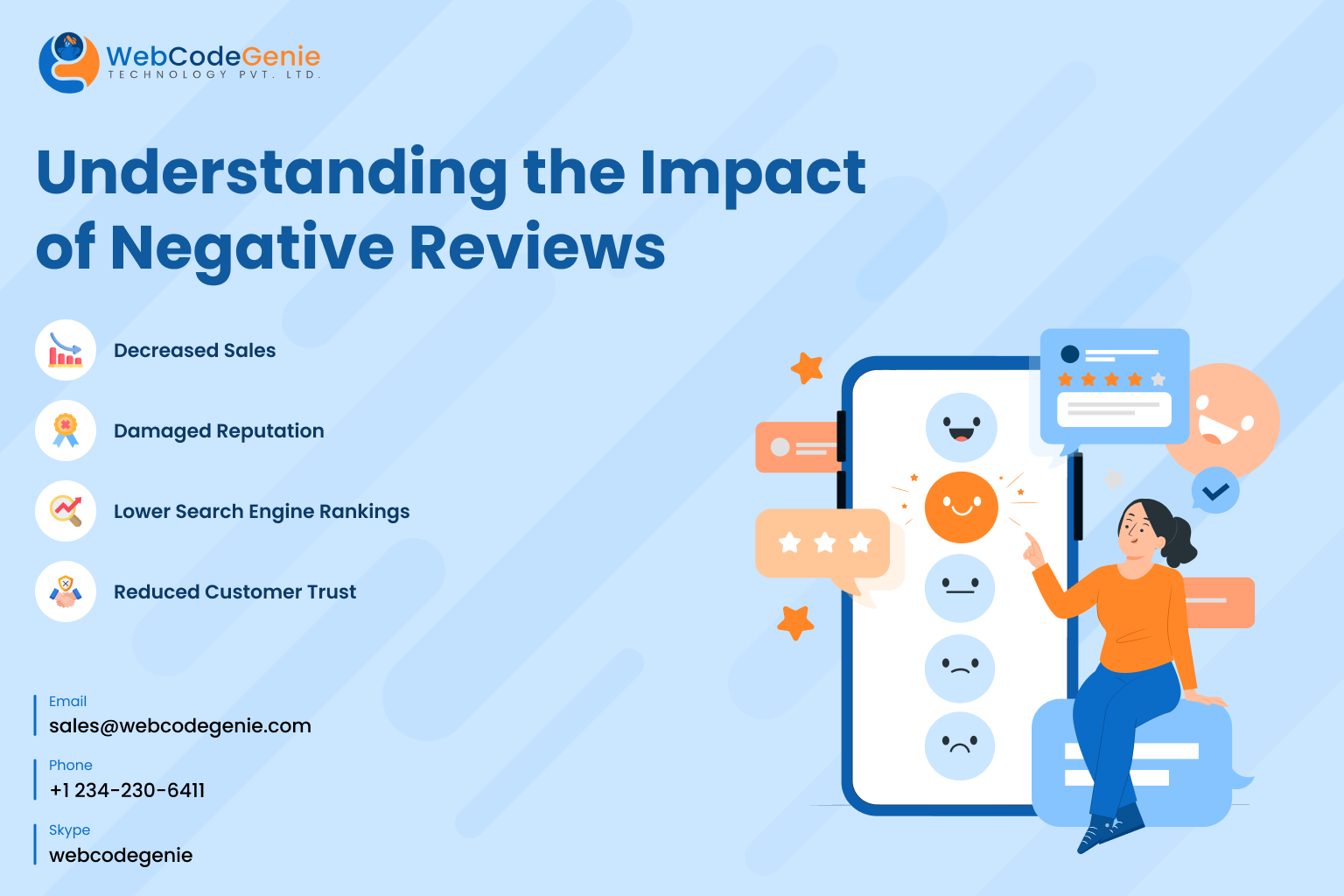
Customer opinions hold immense power in today’s market. When potential clients are deciding whether to use your products or services, they often turn to reviews for guidance. A single negative review can plant a seed of doubt, potentially costing you business.
Negative critiques can impact your enterprise in several ways:
- Decreased sales
- Damaged reputation
- Lower search engine rankings
- Reduced customer trust
Understanding these consequences is crucial for motivating yourself and your team to address issues head-on.
Analyzing and Responding to Bad Reviews
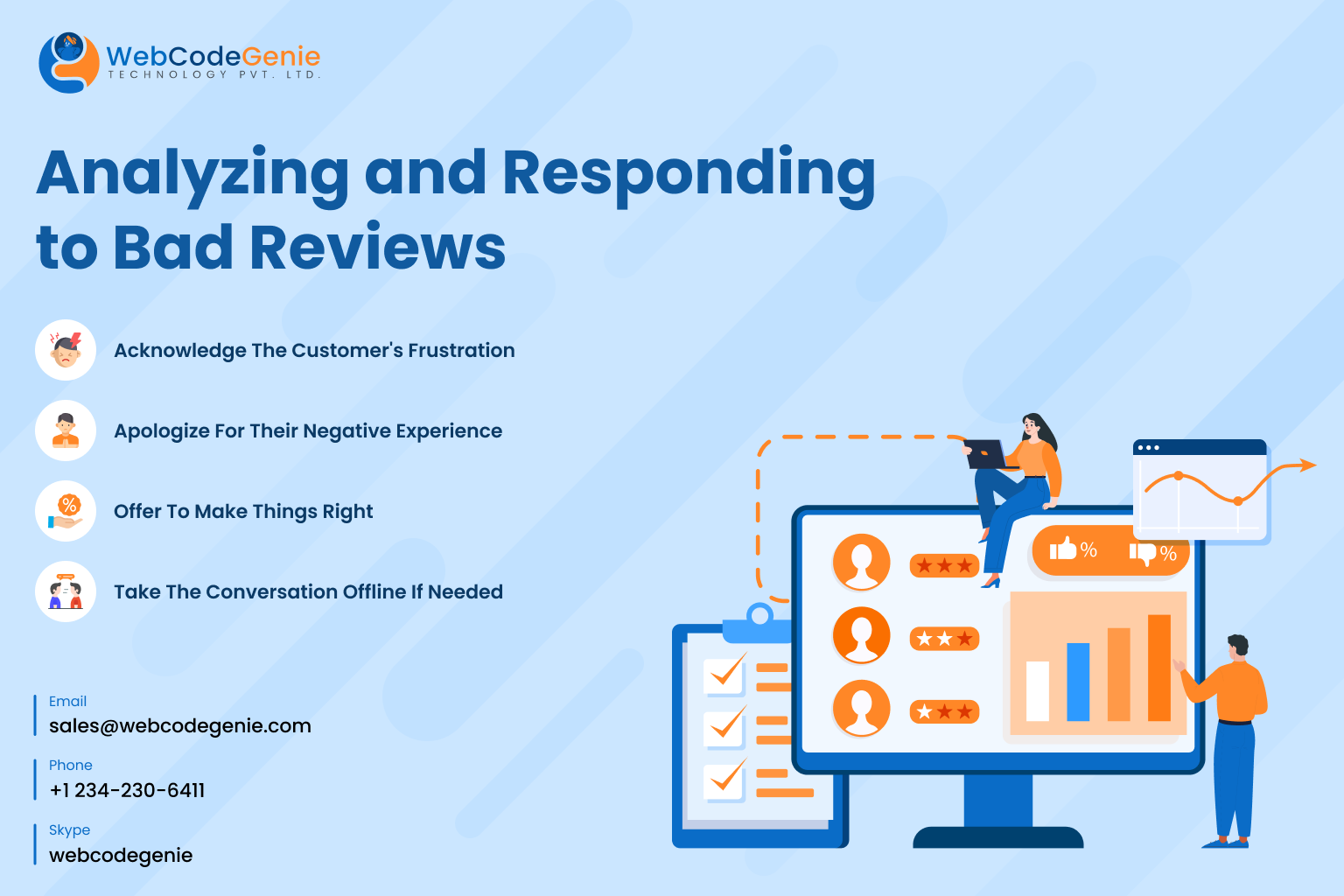
To effectively deal with negative reviews, start by analyzing them carefully. Look for patterns – are there recurring complaints about a particular product, service, or aspect of your business? This data is helpful in pinpointing locations that require development.
Not all negative reviews are created equal. Some may result from misunderstandings or unrealistic expectations, while others highlight genuine problems. Learn to differentiate between the two to prioritize your response efforts.
When responding to negative evaluations, time is of the essence. A spark-off reaction shows that you price purchaser remarks and are dedicated to resolving problems. Aim to reply within 24-48 hours, if viable.
When crafting your response, keep these key points in mind:
- Acknowledge the customer’s frustration
- Apologize for their negative experience
- Offer to make things right
- Take the conversation offline if needed
A skillfully written rebuttal can win over a disgruntled consumer. Remember, it’s not just about addressing the individual reviewer – your response will be read by potential customers too.
Taking Action and Improving
Don’t just pay lip service to customer complaints – use them as a catalyst for real change. If multiple reviews point to a specific problem, take concrete steps to fix it. This could involve updating policies, improving products, or enhancing service delivery.
Equip your team with the knowledge and skills they need to prevent similar issues in the future. This might include customer service training, product knowledge workshops, or process improvements.
After addressing the initial complaint, follow up with the customer to ensure their satisfaction. This extra step can go a long way in rebuilding trust and potentially converting a negative review into a positive one.
Sometimes, a gesture of goodwill can smooth over even the roughest customer experiences. Consider offering a discount, free product, or other compensation to make things right. Just be sure to do so privately to avoid setting unrealistic expectations for other customers.
Leveraging Positive Reviews
While you’re working on addressing negative feedback, don’t forget to cultivate positive reviews. Encourage happy clients to share their reports online. This can help counterbalance any lingering negative reviews and paint a more accurate picture of your business.
Showcase your first-class evaluations on your website, social media, and advertising substances. This not only boosts your reputation but also demonstrates that you value and appreciate customer feedback.
Conclusion
Negative reviews, while painful, can be valuable learning experiences. By approaching them with the right mindset and strategy, you can turn your worst customer reviews into opportunities for growth, improvement, and even stronger customer relationships. Remember, it’s not about having a perfect record – it’s about how you respond and grow from criticism that truly defines your business.